
Technology
How Our Membrane Filtration System Works
Our swappable membrane cartridges use tangential flow filtration to selectively capture CO₂. Learn what the filtration process involves, what gets replaced, and how often.
The Filtration Core
Tangential Flow Filtration for CO₂ Separation
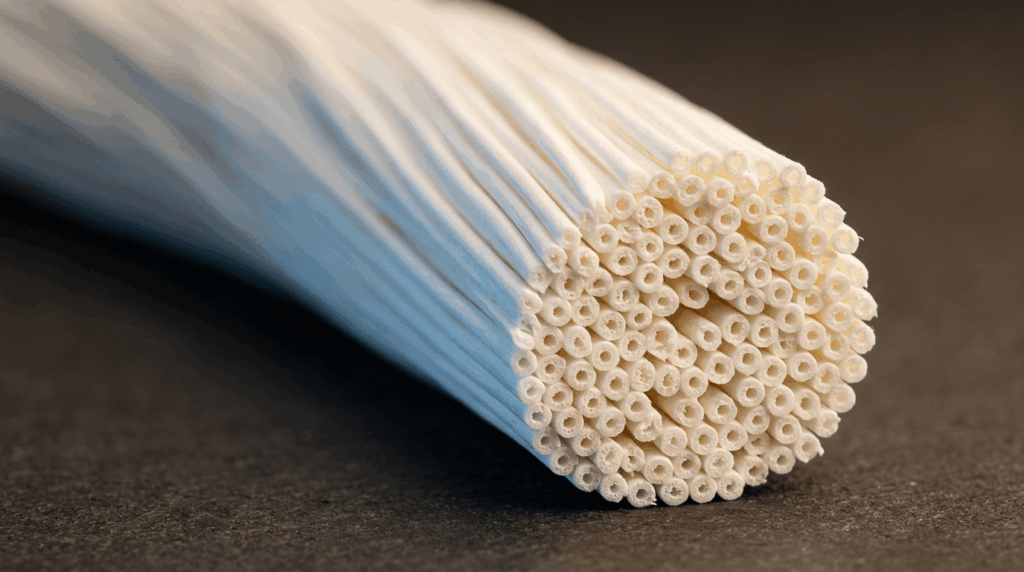
Unlike dead-end filters that force gas directly through a barrier, tangential flow filtration (TFF) runs the gas stream parallel to the membrane surface. CO₂ molecules pass laterally through microscopic pores while the remaining gases continue forward and exit as retentate. This approach reduces fouling, extends cartridge life, and allows continuous operation without frequent shutdowns. The captured CO₂ exits the membrane as high-purity permeate, ready for compression and utilization.
Designed for Predictable Upkeep
Swappable Cartridges, Minimal Downtime
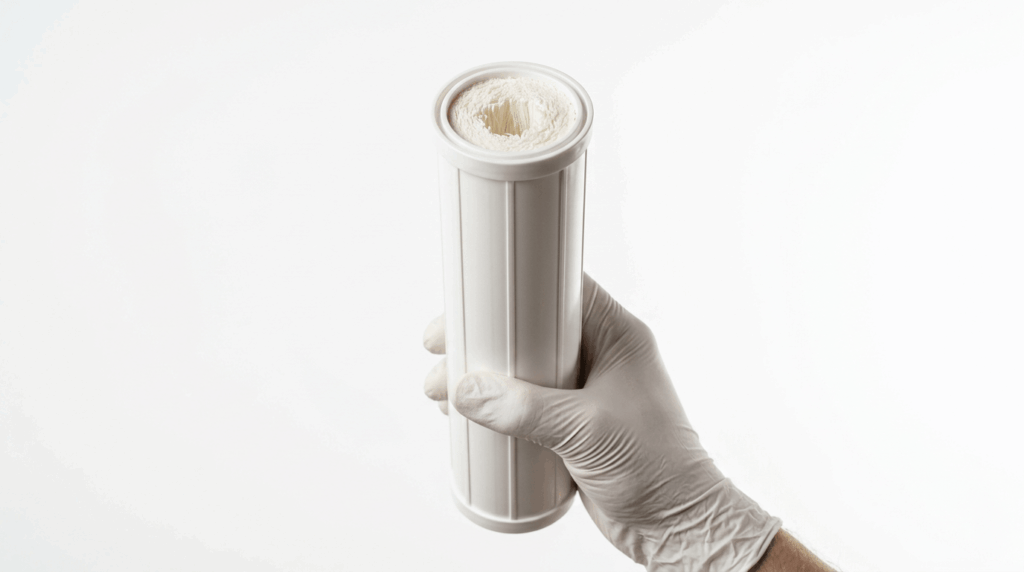
Our membrane cartridges are designed as field-replaceable consumables. When a cartridge reaches the end of its service life, your team or ours swaps it out without specialized equipment or extended downtime. Replacement intervals are tracked through our real-time monitoring system, so there are no surprises. We are currently validating these intervals through bench-top testing ahead of our Spring 2026 prototype. Maintenance expectations will be shared with partners transparently as data accumulates.
Let Us Evaluate Your Emission Stream Together
The composition of your flue gas matters. Different industries produce different contaminant profiles, and we are validating filtration performance across multiple stream types with our early partners. If you want to understand how tangential flow filtration could work with your specific exhaust, a site-fit conversation is the right starting point.

Ready to see if your facility is a fit?
We’re actively working with operators ahead of our Spring 2026 prototype. Schedule a Discovery Session and let’s map out what capture could look like at your site — no pressure, just a practical conversation about your emissions and operational goals.